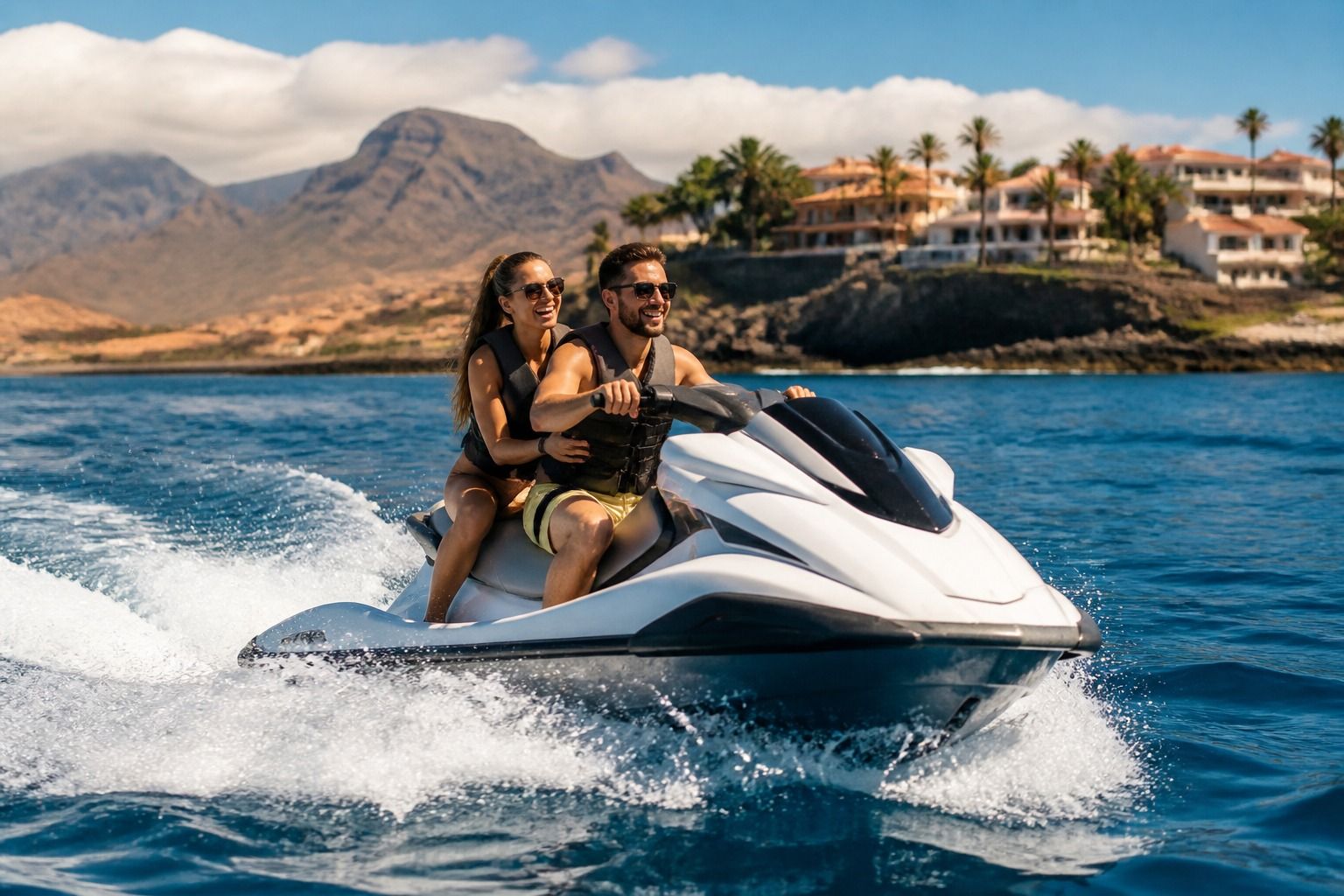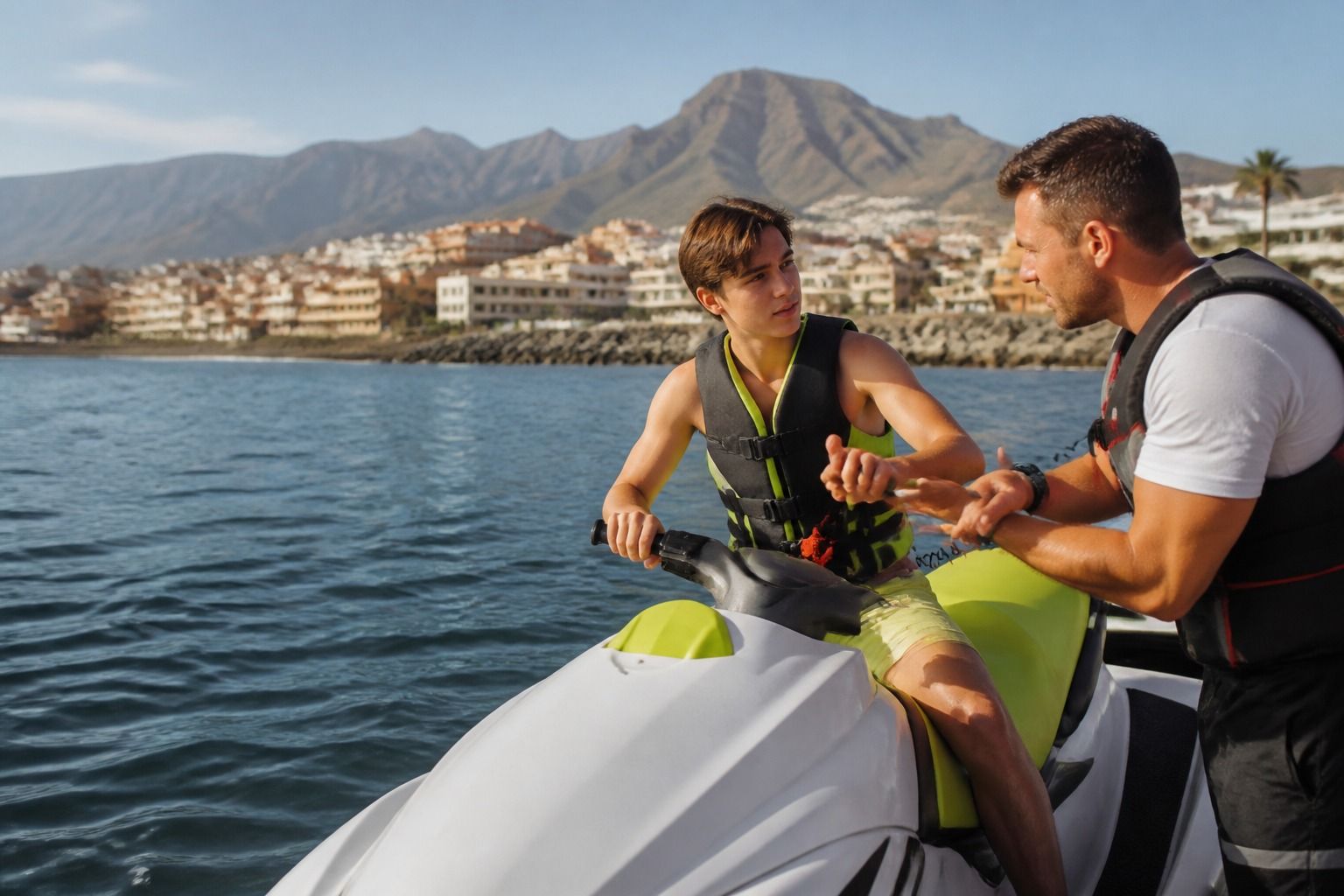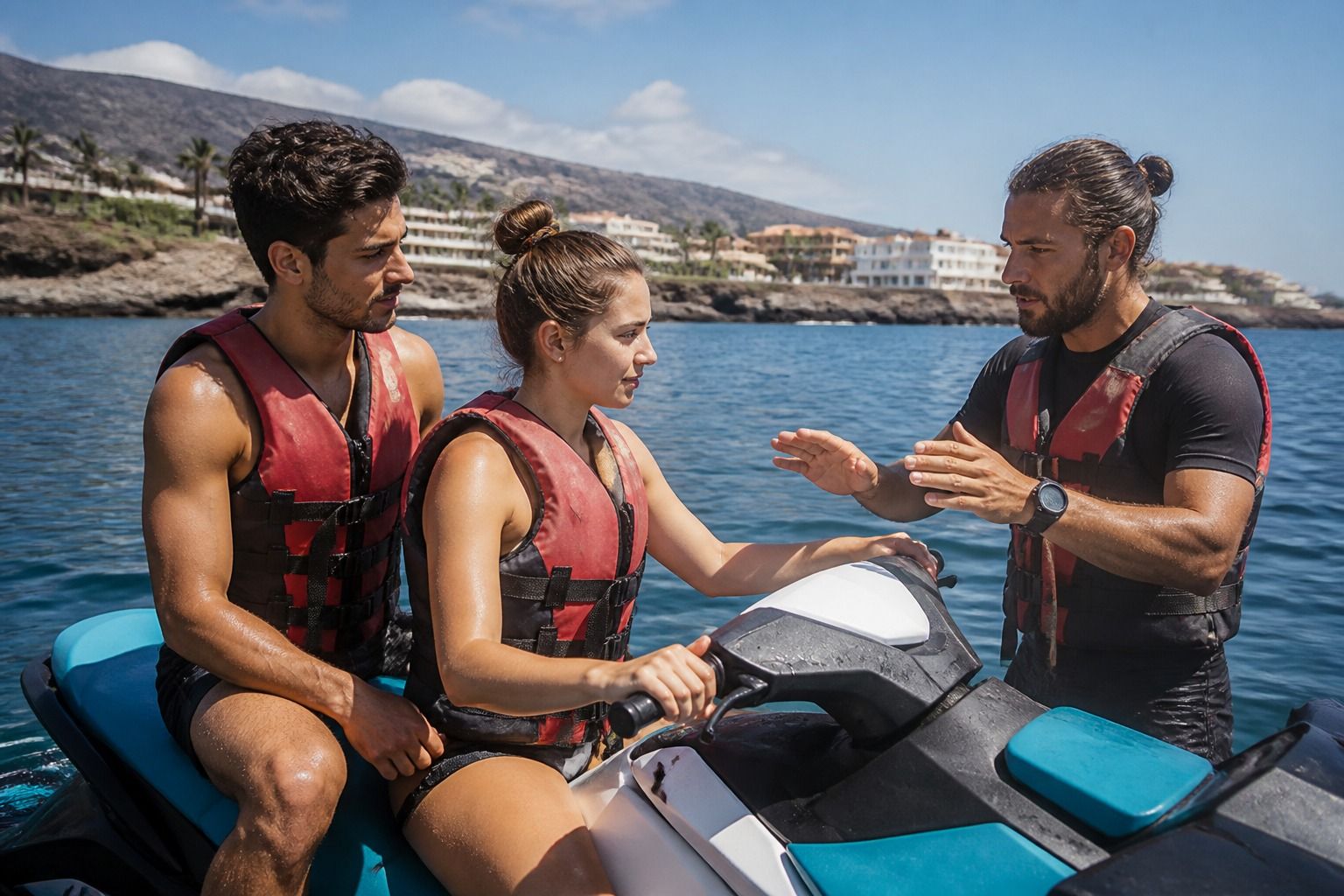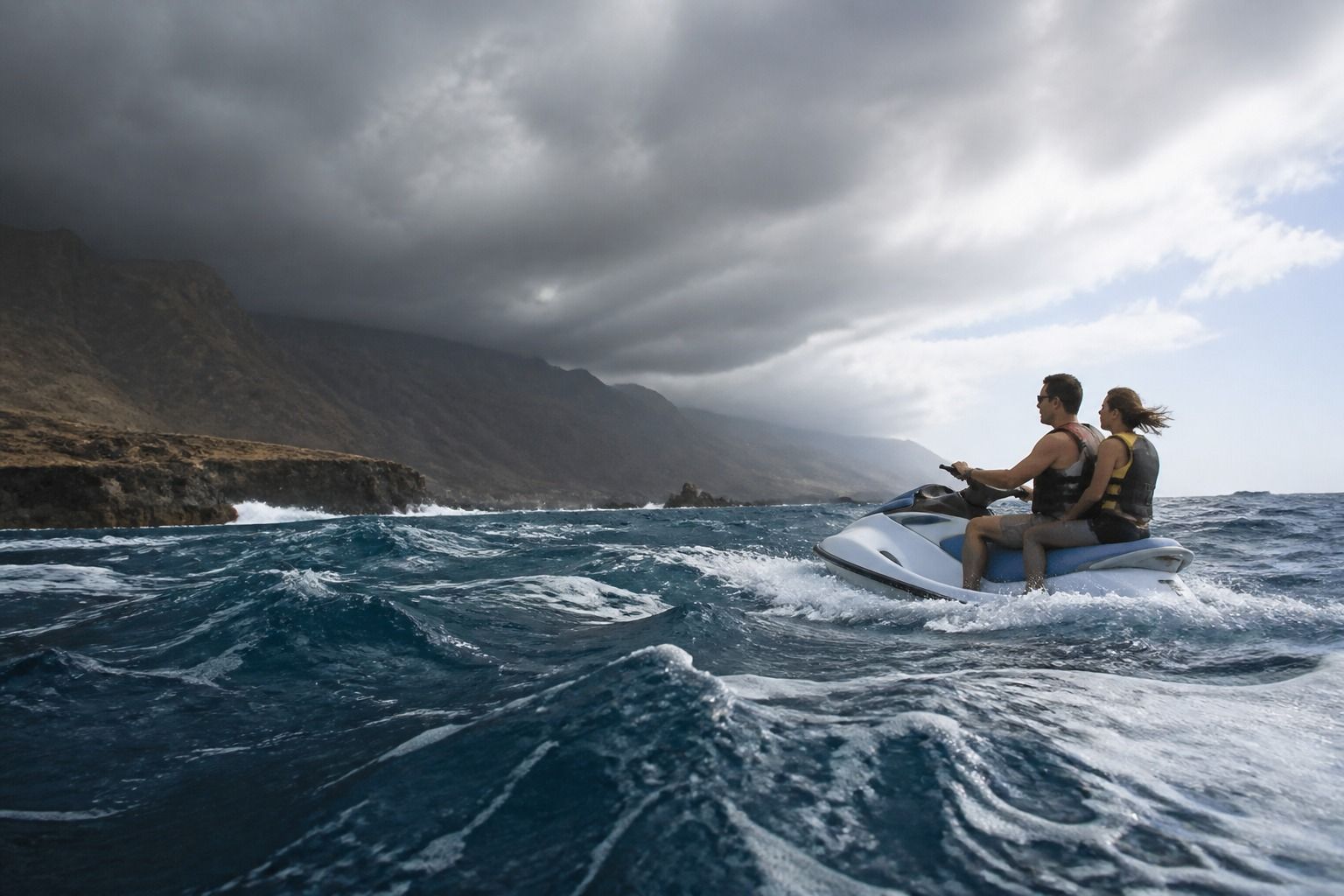
The weather question for jet skiing in Tenerife is rarely answered by a single sun icon. The island can look bright from a hotel balcony while the Atlantic Ocean is choppy enough to make a passenger tense, a route shorter, or an operator move the group to another slot. I would treat the forecast as a starting point and the sea state as the real decision.
Why weather matters more than the forecast icon
Tenerife weather can be beautifully misleading. A clear morning in Costa Adeje may still come with a crosswind. A cloudy hour near Los Gigantes may sit over water that feels more comfortable than expected. For jet skiing Tenerife visitors, the useful question is not simply “will it rain?” but “will the wind, swell, and visibility make this ride enjoyable for our group?” Those are different things, and the phone forecast does not separate them neatly.
Wind and waves in plain language
Wind direction matters because it changes how exposed a section of coast feels. A breeze that seems harmless on the promenade can push chop across the riding area, especially outside protected harbor zones. Swell is different: it can arrive from far away and lift the water even when the local wind is modest. When both wind and swell line up badly, the ride becomes more physical, with more bouncing, spray, and instructor adjustments.
What operators may cancel or adjust
A responsible water sports operator may cancel, delay, shorten, or reroute a jet ski tour when conditions are outside their limits. That does not always mean the whole coast is closed; it may mean that a particular route is not sensible for that time, group, or machine setup. Good operators usually prefer an annoyed customer on land to a frightened one at sea. I take that as a positive sign, not an inconvenience.
Ask how decisions are made and when you will be told. Some providers make the call early; others wait until the instructor checks the water. Both can be reasonable, but the refund policy and reschedule options should be clear before payment. If the answer is vague, you are not really buying a ride; you are buying a small argument for later. This matters even more when the jet ski tour is tied to hotel pickup, children, or a tight airport-day schedule.
Questions to ask before paying
Before paying, I would ask four plain questions. Where exactly does the ride start? Is today suitable for beginners or passengers? What happens if wind or swell changes the route? If the operator cancels, do you get a refund, a new time, or only credit? These questions are not dramatic; they simply move the conversation from glossy water sports Tenerife jet ski photos to the real conditions of the day.
It is also worth asking about clothing and storage. Choppy water means more spray, and a dry bag that feels optional on a calm day becomes useful when the sea has texture. Glasses, phones, hotel key cards, and loose sandals are the small things people remember after the ride for the wrong reasons. If the operator gives direct, practical answers, that usually tells me more than a long sales pitch.
When it is smarter to reschedule
Move your slot when the least confident person in the group is already uncomfortable on land, when the operator says the route may be heavily adjusted, or when the ride is mainly for relaxed sightseeing rather than a physical splash. There is no shame in choosing a calmer window. Tenerife will still be there tomorrow; a nervous passenger may not want to try again if the first experience feels rough.
Do not reschedule because a cloud passed over the sun. Do consider it when wind, swell, poor visibility, or a rushed cancellation policy stack together. Jet skiing is best when the water asks for attention but not constant negotiation. The sweet spot is a ride that feels alive, controlled, and enjoyable for the actual people on the machine, not for the version of yourself that booked it from a sunbed two days earlier.
Extra checks before choosing
For Jet Ski Tenerife Weather: Wind, Waves, and When to Move Your Slot, the final decision should come down to practical evidence rather than the loudest booking card. Check the real riding time, the meeting point, the cancellation rule, and whether the provider explains the route in plain English. If two offers look similar, the one with clearer operating details is usually the calmer choice.
It also helps to match the ride to the rest of the day. A jet ski slot can leave people wet, sun-hit, hungry, or slightly late for the next plan. Leave enough time for check-in, a safety talk, photos, changing clothes, and a slow return from the marina. That buffer makes the activity feel intentional instead of squeezed between transfers.
For groups, decide before arrival who will drive, who will ride as passenger, and whether anyone is nervous about speed or chop. A shorter guided route with a confident briefing can beat a longer bargain ride if the sea is rough, the group is mixed, or the operator is vague about passenger comfort and return timing.
What to confirm on the message thread
Before paying for Jet Ski Tenerife Weather: Wind, Waves, and When to Move Your Slot, use the message thread to remove the soft spots in the offer. Ask for the exact desk name, arrival time, total activity time, expected time on the water, and what happens when the guide changes the route because of wind. A good answer does not need to be long, but it should be specific enough that you could find the meeting point and understand the plan without guessing.
That confirmation is especially useful in Tenerife South, where many hotels, beaches, and marinas sit close together on the map but feel separate when you are walking in sun with a towel and a phone in your hand. The best jet ski booking is not always the cheapest one; it is the one that makes the day predictable enough that the ride itself can stay fun.
How to talk to the operator about conditions
The best weather question is specific. Instead of asking whether the weather is good, ask whether the planned route is running as normal, whether the water is comfortable for first-time drivers, and whether passengers are likely to get a rough ride. Operators read the coast every day, but they also need to know your group. A confident driver may enjoy a lively surface; a nervous passenger may remember the same conditions as a mistake.
Ask the cancellation and rescheduling policy before the day turns awkward. Some changes are operator decisions, some are safety decisions, and some are simply your preference because the group no longer feels comfortable. Those are not the same. Knowing the difference before paying makes it easier to accept a moved slot or choose another activity without arguing over terms at the last minute.
When moving the slot is the better decision
Morning often gives a calmer-feeling ride, but it is not a magic rule. The smarter move is to keep enough space in the day that a changed slot does not ruin everything around it. If the sea looks rough from the promenade, if the wind is stronger than expected, or if one passenger is already anxious, it is reasonable to ask whether a later or earlier time would be more comfortable. The point is not to avoid every wave. The point is to avoid turning a fun activity into something the least confident person in the group endures.
For Los Gigantes or any route with a more open-water feeling, I would be even more conservative. The cliff scenery is impressive, but distance and exposure make comfort checks more important, not less. A shorter south-coast ride in decent conditions can be a better memory than a longer route chosen only because the title sounded more dramatic.
Keep that final note saved offline, because marina mobile coverage and roaming data are not details worth depending on at check-in.